
 By E3D Training Professor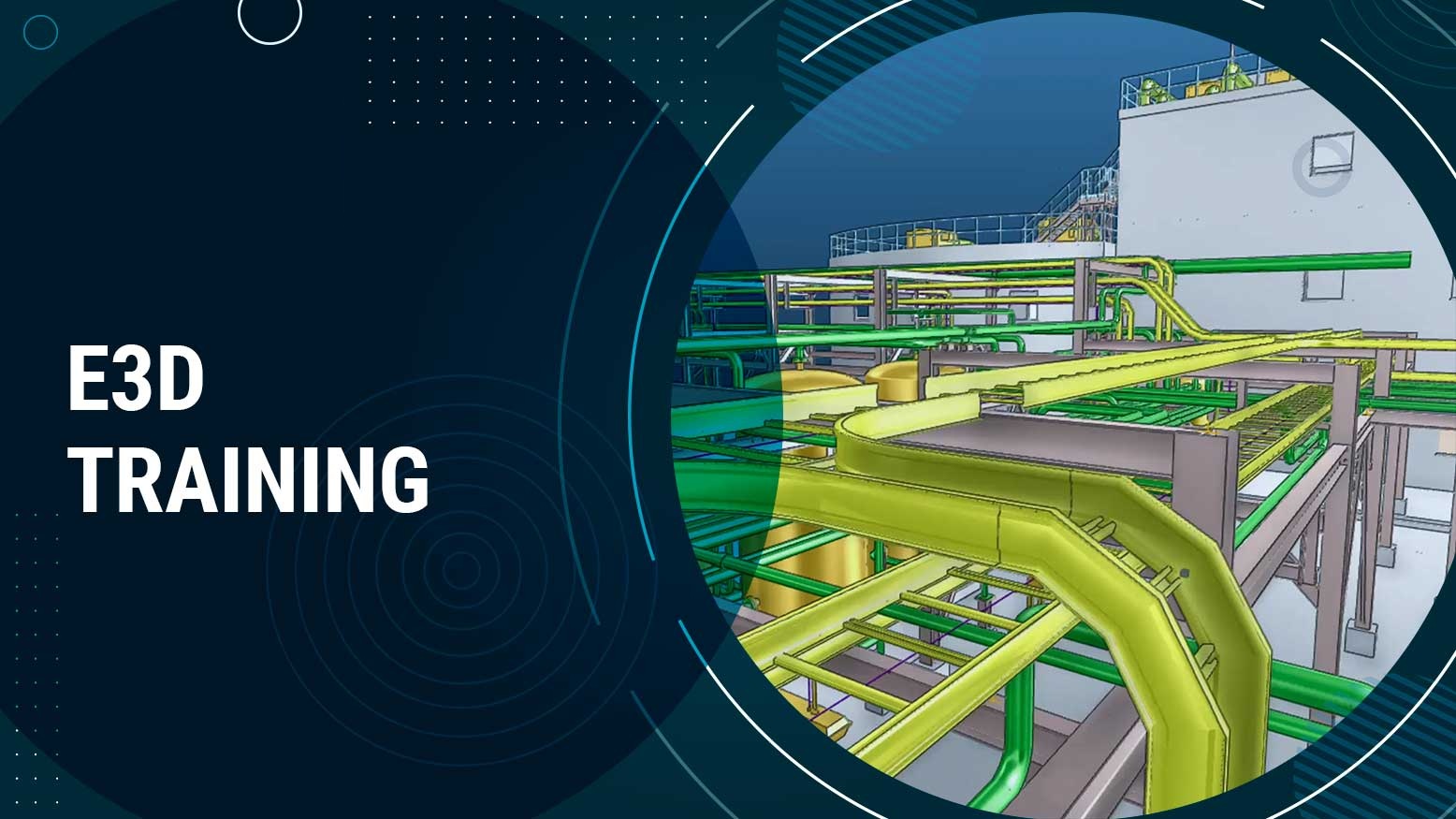
In today’s fast-paced engineering and construction industries, 3D design tools have become essential in ensuring efficiency, accuracy, and quality in project execution. One such tool that has revolutionized the industry is AVEVA E3D.
This advanced software solution provides comprehensive 3D design capabilities for industries like oil and gas, power, and marine. As the demand for skilled professionals proficient in E3D grows, so does the importance of E3D training. In this article, we’ll explore the significance of E3D training, its benefits, and how it can enhance your career prospects.
What is AVEVA E3D?
AVEVA E3D is a powerful 3D design and modeling software primarily used for plant and infrastructure design in industries like process, oil & gas, power, and marine. The software integrates various engineering disciplines into one unified platform, enabling engineers to design and visualize structures and systems in a 3D environment.
The tool helps users to avoid design errors, clashes, and inefficiencies that are common in traditional 2D designs. E3D integrates different engineering functions, such as piping, electrical, and structural design, enabling professionals to work collaboratively and more effectively.
Why is E3D Training Important?
- Enhanced Design Skills: E3D training equips engineers with the skills required to effectively utilize the software for designing complex structures. Understanding the software’s capabilities, commands, and features enhances your design workflow, making it possible to work more efficiently and effectively.
- Clash-Free Modeling: One of the key benefits of using AVEVA E3D is its built-in clash detection feature. This feature identifies and resolves conflicts between different systems (such as piping, electrical, and mechanical) in real-time. Without proper training, users might miss potential clashes, leading to costly errors later in the project. Proper E3D training teaches users how to leverage these features to detect and resolve conflicts before they become problems.
- Collaboration Across Disciplines: AVEVA E3D allows different disciplines—such as piping, structural, electrical, and HVAC engineers—to work together in a unified 3D space. Training in E3D teaches users how to effectively collaborate across these disciplines, reducing silos and ensuring smoother project execution.
- Improved Visualization: The software offers powerful visualization tools that allow engineers to create realistic 3D models. This helps not only in design but also in communication with clients and stakeholders. E3D training ensures that engineers can fully leverage these visualization tools to create clear, accurate, and presentable designs.
- Career Advancement: Proficiency in E3D opens doors to various job opportunities in industries like oil & gas, construction, marine, and power. By completing E3D training, professionals demonstrate their expertise in using one of the most widely adopted 3D design software tools, which can lead to career growth, higher salaries, and more job offers.
Types of E3D Training
There are various types of E3D training available to cater to different learning needs and professional levels. Here’s an overview of the most common training formats:
- Online Courses: Online training programs offer flexibility, allowing learners to progress at their own pace. These courses often include video tutorials, hands-on exercises, and quizzes. Many online platforms, such as Udemy, offer E3D training for beginners, intermediates, and advanced users.
- Instructor-Led Training: Instructor-led training is a more personalized learning experience, where students are guided by experienced professionals. This type of training is usually conducted in classrooms or virtually, and learners have the opportunity to interact directly with instructors and peers, which can enhance understanding.
- Vendor-Specific Training: AVEVA itself offers official E3D training through its AVEVA Connect platform. This is typically the most comprehensive and up-to-date training option, providing users with a deep understanding of the software, its latest features, and its practical applications. This training is especially useful for companies who want to ensure that their teams are fully proficient with the software.
- Custom Training: Some organizations offer custom E3D training, which is tailored to a specific company’s needs. This can be beneficial for teams working on large-scale projects, where a tailored approach is needed to meet specific project requirements.
What Does E3D Training Typically Cover?
- Introduction to E3D: This includes understanding the software’s user interface, navigating the workspace, and familiarizing oneself with the various design tools and features.
- 3D Modeling Techniques: Learners are taught how to model 3D objects such as pipes, structures, and electrical systems. This section focuses on creating accurate, scalable models that represent the real-world structure.
- Clash Detection and Resolution: A critical aspect of E3D is learning how to use the built-in clash detection tools. This module teaches users to identify and resolve clashes between different design systems early in the process, avoiding costly rework during construction.
- Design Coordination: Effective collaboration between different disciplines is key to successful project execution. E3D training includes learning how to coordinate designs across disciplines like piping, electrical, and civil engineering, ensuring smooth integration and execution.
- Project Management and Documentation: E3D training covers how to manage projects, produce detailed reports, and generate design documentation such as isometrics, general arrangement drawings, and bill-of-materials (BOM).
Benefits of E3D Training
- Increased Productivity: With better tools and knowledge, engineers can complete designs faster and with fewer errors.
- Cost Savings: By detecting clashes and errors early in the design phase, projects are less likely to face costly rework and delays.
- Industry Recognition: Completing a reputable E3D training program adds significant value to a professional’s resume and increases employability within industries that use AVEVA E3D.
- Real-World Application: E3D often includes hands-on exercises and case studies, allowing learners to apply their skills in practical situations and build confidence.
Conclusion of E3D
E3D training is a critical investment for professionals in industries like engineering, construction, and design. With the software’s powerful 3D modeling, clash detection, and multi-discipline integration features, E3D is transforming how projects are designed and executed.
By undertaking E3D training, engineers and designers can boost their productivity, enhance their collaboration skills, and advance their careers. Whether through online courses, instructor-led sessions, or custom training, mastering E3D opens up numerous career opportunities in the competitive world of engineering and construction.